Friday, 13 December 2024

Rapid Fire!/Able Archer rules - The battle of Cuito Cuanavale 1987-88 in 20mm - Part 1: What I´ve amassed up to now


The battle of Cuito Cuanavale is part of my youth through TV and magazines together with Iran-Iraq war and Lebanon 82 and it sparks plenty of vivid memories from those dangerous and deadly conflicts of the Cold War. I also had relatives in South Africa and even one that fought at this precise campaign a fact which fueled even more my interest to the Angolan conflict with FAPLA and Cubans facing UNITA and the SADF. For some reason I still could not find the 14 years long Portuguese colonial war (Angola, Moçambique and Guiné Bissau) interesting enough for me to model it. Maybe because it still brings lots of pain to many that are still around, from both sides, and close to me. 

Most of the planes, exceptuating the Mig-23 were made years ago together with most of the infantry. The vehicles, on the contrary are brand new and came mostly from 4D models (yes, I know their Sdkfz 251 is around 1/56 and the first batch of small boxes with tanks were toys but after these the brand made very nice and cheap models and continues to do so at a very fast rate). 

For now I have an almost finished Angolan Brigade with the reconnaissance vehicles and most of the artillery still missing. 

The simple green painting of the vehicles without any crew will allow for its use in other armies of the Cold War period and even after. 


I built 4x T-55 from 4D, enough for the full complement of an Angolan brigade tank battalion (16 tanks instead of the Soviet 30 tanks). The model is a very easy build labeled T-59, the Chinese version of the T-54/55 but, as its an early copy it becomes virtually the T-55. Later the T-59 got many extras which could be seen abundantly in the Iraqi army, for instance. 


 One of the three battalions of infantry in each Angolan brigade was equipped with BMP-1. These three are Eaglemoss die-cast simply repainted and with added rear unditching log and antenna. 


I finished all my BTR-60 - the ones that should be here - and had to use these BTR-80 instead. In fact Angola has 11 of these BTR-80 but they arrived much time later  Cuito Cuanavale. Even so the logic of a simple paint scheme continues for its usage elsewhere. 


The Ural 260 is another non-existent machine in the Angolan army but its not much different from other Soviet models, simply larger and very useful for other scenarios. 


There is a battery of six  BM-21 in each Angolan Brigade. This 4D model is very recent and one of their best. 


The three FAPLA battalions are made from bodies of Esci´s Spetnaz and Vietcongs with all types of field caps I could find (USAAF and even some DAK Esci with the cap´s peak cut). 


Some of the command stands got the brown beret. The 120mm mortar is Valiant Miniatures. 


The typical FAPLA battalion organized for Able Archer with three companies of six figures each and support. 


The Angolan Airforce (FAPA on those days, now FANA) has a number of French and Soviet helicopters like this MIL-MI 24 (Esci?). 


The MIL-MI 8 (SMER) is the most numerous Angolan helicopters. 


The Gazelle (Heller) got anti-tank missiles made of EverGreen plastics. 


I painted blue all canopies of the Angolan fighters and fighter-bombers. This MIG-21 is Fujimi. 


This one couldn´t fit the first family picture and its shown now, a MIG-21 from Matchbox, a much older and not as good model as the Fujimi one. 


This elegant SU-7 is a SMER model. 


The SU-22 (Plastyk)  was the most potent Angolan bomber at Cuito Cuanavale. 


Many MIG-23 (Academy) were piloted by Cubans and they scored several victories over the SAAF Mirages without losses something that  was only recognized years later by South Africa. 

Next: one more stand of Ottoman Sipahis for Mohacs 1526. 

Saturday, 30 November 2024

Rapid Fire! rules - Bir Hakeim 1942 (part 10) - The French anti-tank guns


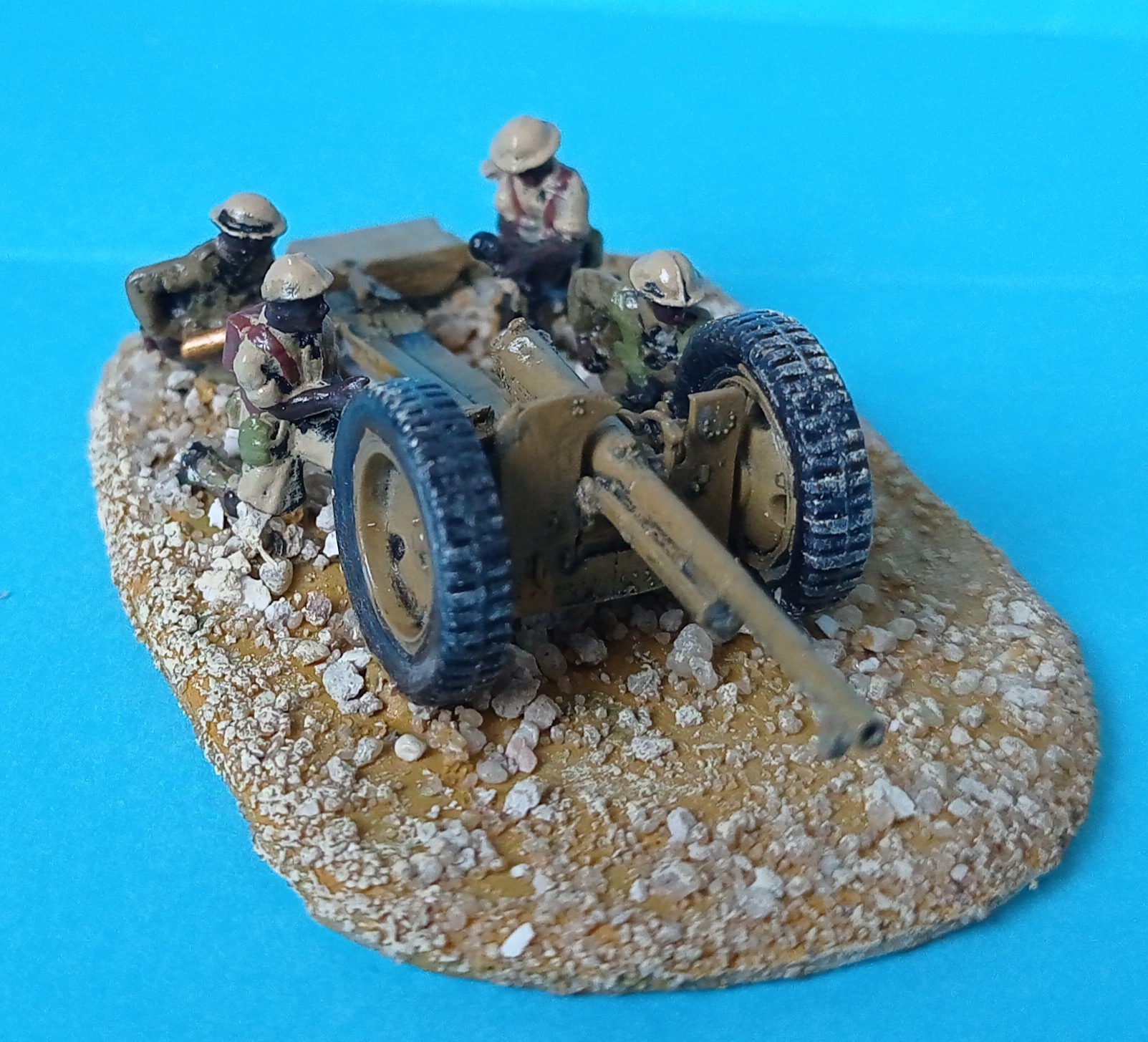
The Free French at Bir hakeim had 30x 75mm guns (6x in RF! terms) in the anti-tank role with cut-out shields and truck tyres in order to make a lower and smaller silhouette. Together with those the French also had 7x 47mm and 18x 25mm anti tank guns. As I already placed 3x 25mm guns in SP mode on top of Morris trucks I just added one more. 


The  FtF 75mm guns had its shields cut like the one present at Les Invalides Army Museum. The 47mm and 25mm are 3d prints in resin by BPM. This brand evolved greatly from the days of the PLA plastic used initially. Unfortunately I just ordered these two hoping that its small weight and size would escape customs. To no avail. BPM dispatched the parcel in a couple of days but it took a month to reach Portugal and then customs made me pay more for it than for the original models. Brexit oblige...


The guns were crewed with old plastic figures from Airfix and Matchbox and some newer ones from StreletsR. Many of the figures had rifles and SMGs taken out and replaced with shells. 


A Chad-Ubangi crewed 75mm gun. I´m not sure about this but I´ve seen a greater number of gun crews with helmets in the period pictures maybe because the artillery spots attracted plenty of artillery fire. 


The extras from the FFL Strelets box of support weapons makes good artillerymen. 


The usage of shells in the old Airfix and figures can be seen in several figures with the 8th Army Vickers No1 (far right making a very good anti-tank crewman). 


The main problem with this batch is the usage of the original FtF wheels as I couldn´t find twelve equal truck tyres. 


This is the Matchbox 1941 Cadillac I found in a supermarket used for scale in a previous post on pine tree woods. It will become the command car of an Umbau column for Holland 1944. Most surely no Cadillac reached Holland after 1940 but even so this one must not be far away from other european classy cars of the period. This one belonged to my youngest and had to be painted and based in the night shift while he was sleeping. 

Next: an Angolan Brigade for Cuito Canavale or the last few walls of Bir Hakeim.

Friday, 22 November 2024

Impetus Rules - Mohacs 1526, part 13 - More Rumelian and Anatolian Sipahis in 20mm


These Sipahis are made mostly from the Italeri boxes of Mongols and Saracens with a few add ons and cuts. 


There are also Zvezda (sand colored) Sipahis and a Agha and new plastic card shields. The lances are plastic broom sticks and many of the heads got new turbans made of Green Stuff. Some Sipahis also got Esci and StreletsR heads. When visiting the Istanbul military museum I got surprised with the amount of beautiful and very large paintings depicting the Mongol army of Genghis Khan not also in Anatolia but also in China which shows the proximity that the nowadays Turkish (the army at least) feels towards the Mongols. In fact the Italeri Mongol box shows horses and figures clad in equipment that is also the Ottoman Medieval and early Modern armies. I was thinking that the Lasso would have to be taken out from the Italeri Mongol horses but while reading more on the subject I found that even the Lasso was also used by the Ottoman Sipahis. So these Mongol figures are good enough for the barded Rumelian (Balcanic mostly) Sipahis. The Green Stuff turban was added because of the muzlim influence and is naturally not placed on the Mongol original figures as the Mongols are whether Shamanists or Buddhists. 


The Rumelian Sipahis. 


One Sihlatar (red  headdress, similar in shape to Janissaries)  was added to both groups of Sipahis. I´m not sure of this but maybe the elite Sihlatar were added to groups of Sipahis in order to influence them in military prowesses and make them more disciplined. In several cinematic researches the Sihlatar are never shown in large groups so maybe, just maybe, they can be portrayed like this. The Agha is the beautiful Zvezda figure. 


The Rumelian group was easy to paint due to the metal barded horses and armour of the cavalrymen. Mostly red and green was used in the details. Painting groups like this in the same colors makes the painting process much easier. Other groups have or will have different colors making a large Ottoman force a very colorful sight. 


The Anatolian Sipahis have both Mongol and Saracen Italeri figures together with a few Zvezda. 


Blue was used for most of the details but the more varied nature of non armored horses and men forces the use of some more colors. 

Next: Angolans for 1987-88 Cuito Canavale. 

Saturday, 16 November 2024

Rapid Fire! - Wargaming pine trees from Christmas decorations


For long I was trying to find pine trees in a good quantity, reasonable price and in good size for 12mm up to 25mm scale. The main goal was the Ardennes and for these trees to be used for Rapid Fire 20mm games, even if these ones can be useful a bit all over the world. 


Well, Santa was generous and at the local Action warehouse I found eleven of these bags, each with 10 trees (four small at around 5cm height; three medium sized around 8cm and three others around 11 cm). At 2 euros each you can have 110 trees total while spending around 20 euros. Not only they are cheap but they are reasonable depictions of miniature pine trees. All trees had an exaggerated sized piece of plastic to keep them standing but that could be solved with texture and flocking. 


Another place was visited for the bases, a very nice downtown Chinese shop specialized in handycraft. I brought all kind of round bases I could find and the trees got stuck with electric glue together with some pebbles of different size and shape. 


The bases were then textured and flocked with the same style as most of my basing. The 1/72 Matchbox car is from my youngest kid and is here just for scale. As I´m feeling attached to it this one will soon become a command car for a German Umbau column from the Market Garden period. 


Again for scale with  two Matchbox figures.


Bird´s view. 


All bases were made taking into account the accomodation of a varied number of Rapid Fire stands from my regular 3,5 X 2,5cm infantry stands to some larger AT gun stands. 

Next: More Ottoman Sipahi. 

Friday, 15 November 2024

Impetus Rules - Mohacs 1526, part 12 - Hungarian Hussars in 20mm


Some badly needed light cavalry for the Hungarians (CL Hungarians or Serbians)  is on the way to the shelves of Mohacs (in fact transparent plastic drewers). The models are metal and made in Hungary by Takács Krisztián. 


The models have five parts, horse, cavalryman body, head, lance and shield. The shields, heads and lances are different allowing plenty of variations. Two of the figures had flag poles and I was also given two beautiful Hungarian flags. The horses were glued with electric glue to the base for extra sturdiness. 


The Hussars were the most numerous cavalry in the Hungarian army and a few more stands have to be added. 


Next: a bunch of pine trees for the Ardennes. 

Sunday, 3 November 2024

Rapid Fire! NW Europe 44/45 - 101st US Airborne - New C-47 and Waco


Some years ago I bought an old 1960 Airfix C-47 from a guy that sells and collect second-hand toys. The kit was complete and the figures showed clearly its age as they were mostly blobs of plastic. The model kit even so is not bad and was glued very quickly as I discarded all interior. 


The windshield was lost so I used electric glue to fill the space and that shows :) But frankly I know you are not looking at that but your attention was caught by the beautiful laidy, as Bertorelli would say, taking her panties and saying "Com´in". I used the C-47 "Steppin´out" as inspiration but changed the name and the "6N" is also my invention. Try to guess what it means...

The place from where the asspiration... sorry, the inspiration came. 


Only after painting it I realised that the paratrooper is a British one as shown by the shorter boots and the type of helmet. Even so as its not a very detailed character it makes a passable US paratrooper. The open door is again electric glue which hides partially the exiting figure. 


The Waco glider is Italeri and some details were not glued as I want to make a number of them in wood and Blueboard using this one as template. 


At the moment the US airborne fleet counts with one Airfix C-47 and one Italeri C-47 and Waco but more Waco will be added soon. 

Next. Pine trees for the Ardennes or Hungarian cavalry for Mohacs. 

Friday, 1 November 2024

Rapid Fire! NW Europe 44/45 - 101st US Airborne - 3rd battalion done and 501st PIR finished


These ones were black primed for some months and were quickly finished upon the arrival of the latest RFR The Road to Carentan booklet from Masters Colin and Richard. In this batch I added some cute resin prints offered by Pedro Pato of MiniGeneral 3d. The rank and file are the usual Revell and Esci figures as I´m out of SHQ minis. 

Three resin printed Cushman scooters are a beauty with all being different. One will go to each battalion for liaison purposes or, if not necessary, to look good on the table. 


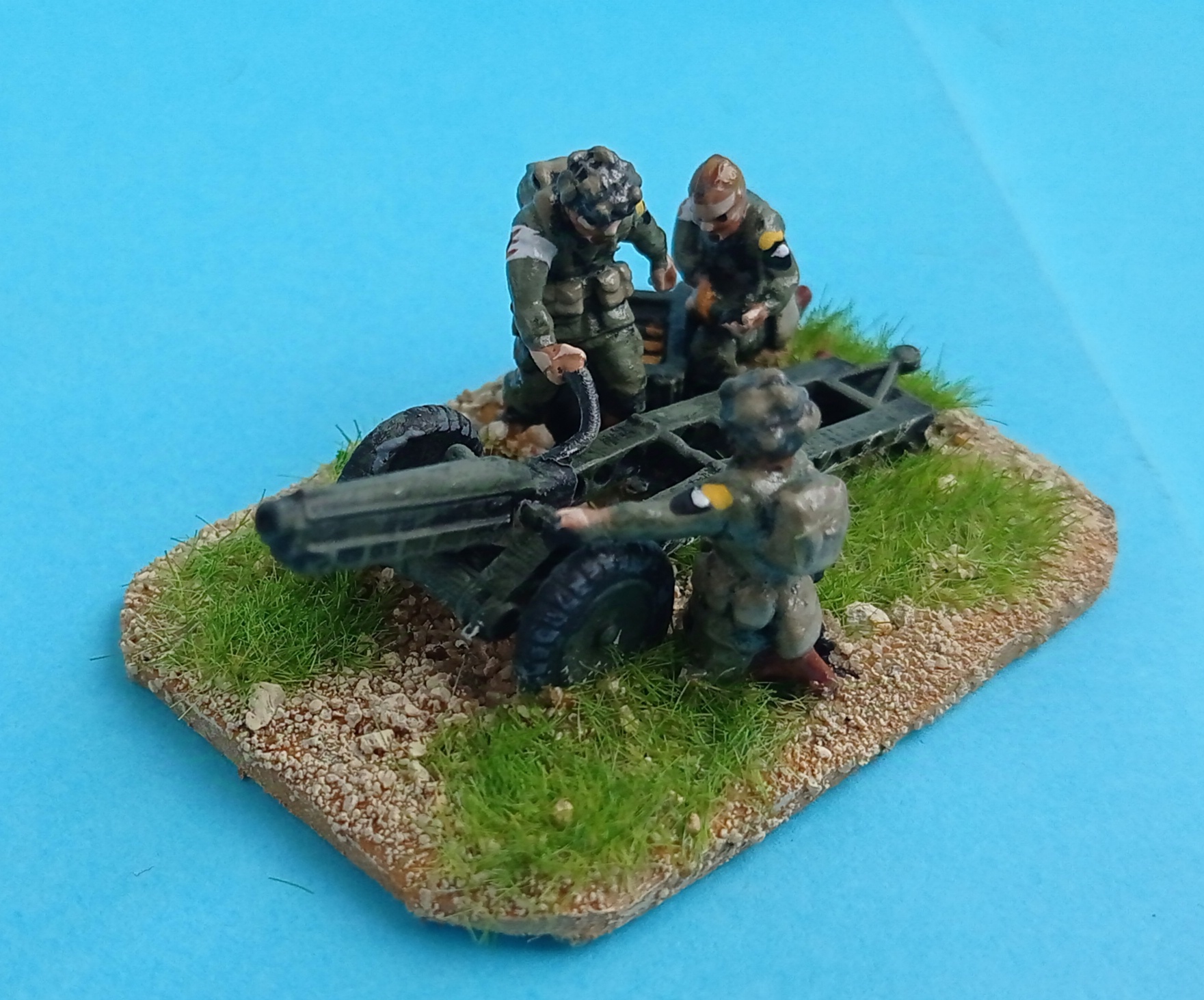
The 3d resin Pack 75mm gun comes with three beautiful figures. 


The 3d resin 57mm AT gun comes with three other lovely  crew, again all different. Only one gun is missing to complete the Para AT battalion as this one is the fifth 57mm of this group. 


The Bazookas are Hasegawa and Revell (the closest one). The No2 are Revell with repositioned M1 carbines and Hasegawa Bazooka rounds. 


Again the Revell tripods of the 30. cals. were turned into bipods with added plastic stocks. 


Together with the OP stand the radio was added to the back of the Thompson armed figure. 


The 81mm mortar and main operator comes from Esci US infantry. With some extra GreenStuff on the uniform and equipment he could join the airborne. The 60mm mortar is made of pieces of plastic. 

Next: more aircraft for the US airborne.